
So often, we hear teams wanting to test at the same frequency as a major B2C sock brand, even though they lack one of the most important variables.
High conversion volume.
Most B2B SaaS brands operate in complex, high-consideration purchase environments, which rarely generate the statistical significance needed to make confident optimization decisions. When your monthly conversion count is in the single digits across campaigns/keywords/ads, traditional testing methodologies break down.
While it would be ideal to have statistical significance before ending an experiment, it's often better to have directional confidence to move at a pace that better aligns with your goals and how much runway you have.
In this blog, we'll cover:
- What's driving the low-volume optimization challenge
- Real examples of how insufficient data leads to poor decisions
- The playbook for optimizing with limited conversion signals
- What this means for B2B teams going forward
Alright, let's get into it.👇
What's driving the low-volume optimization challenge
Three structural shifts have made optimization more complex for B2B brands over the past few years. First, buying cycles have lengthened as purchasing decisions involve more stakeholders and face greater scrutiny. What used to be a 30-day sales cycle now stretches to 90+ days, reducing the frequency of meaningful conversion events within any given optimization window.
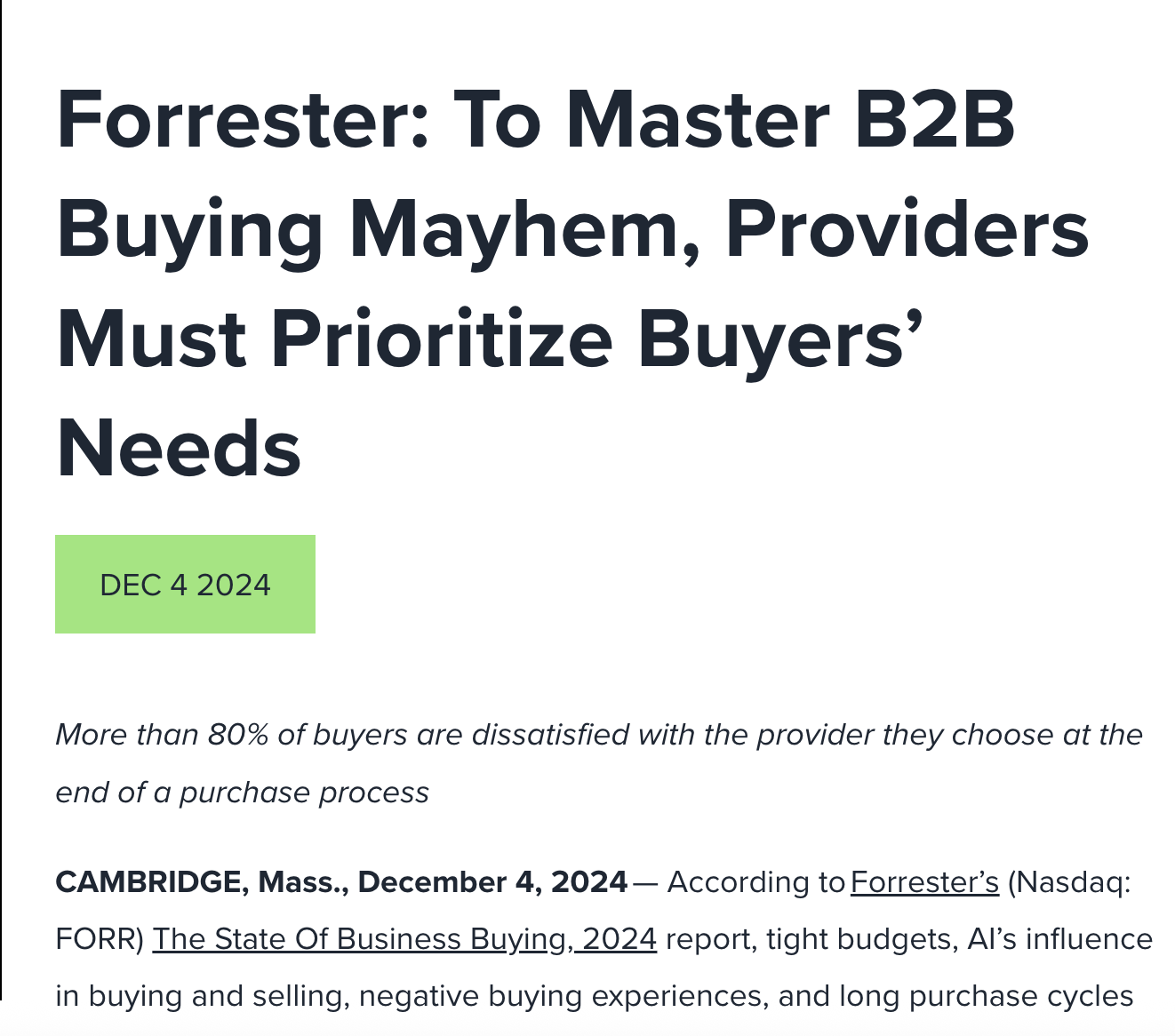
This is a bit dated, but still relevant...Forrester in Their State of Business Buying, 2024 report, published December 2024, found that tight budgets, AI's influence in buying and selling, negative buying experiences, and long purchase cycles are further complicating the B2B buying process, with 86% of B2B purchases stalling during the buying process and 81% of buyers expressing dissatisfaction with their chosen providers.
Second, iOS updates and privacy changes have reduced the accuracy of conversion tracking.
When that volume falls below the platform's thresholds, automated optimization becomes unreliable.As an example, Google Ads has always maintained that 30 conversions over a 30-day period is ideal when using automated bidding strategies like Maximize Conversions.
Third, market saturation has increased competition for the same intent signals. As more brands target identical keywords and audiences, the cost per conversion has risen while the volume of available conversions has remained flat or declined.
These are all real challenges every VP of Marketing is dealing with right now to ensure their brand is positioned well in their respective product category.
Real examples of how insufficient data leads to poor decisions
Consider the example below, which is from a snapshot of a B2B SaaS brand we audited last week.
You have a campaign called Construction Payroll with an ad group with around 15 keywords.Most of the click volume is concentrated around seven keywords, with conversions ranging from 1 to 4 over a 30-day period.
Traditional optimization logic suggests doubling down on construction software for payroll and HR. But with this limited data, the difference could easily be due to statistical noise rather than a meaningful performance variation.
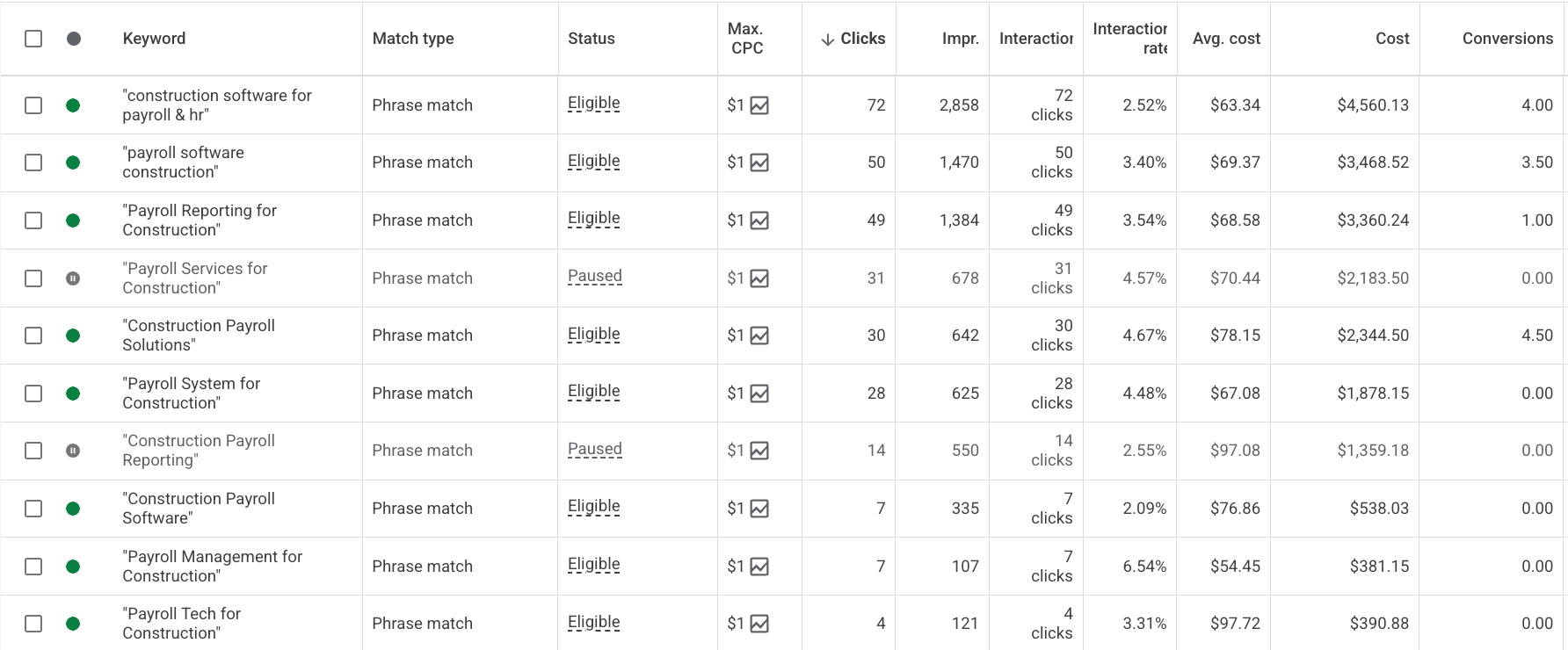
Or consider another situation where a keyword has spent $1,500 over 30 days and has no conversions, but the number of clicks it has generated is below the threshold needed to convert.You then face a difficult decision.
Do you keep that keyword live, or do you pause it?
From a performance marketing perspective, if your website conversion rate was 1% and you had 45 clicks on a keyword, it may make sense to continue running that keyword until you have at least 100-150 clicks. (assuming you don't have other keywords that are already performing well and have additional search impression share to expand).
This decision ignores several factors: seasonal timing, creative quality, audience relevance, and the inherent variability in small sample sizes. The channel may actually perform well with different creative or longer testing periods, but the team never discovers this because they optimized based on insufficient data.
The playbook for optimizing with limited conversion signals
Step 1: Redesign Your Testing Approach
Instead of making multiple small changes throughout the month, focus on two to three high-impact tests per month/quarter, depending on how much you are spending every month.
This concentrates your limited conversion volume on fewer variables, increasing the likelihood of detecting real performance differences. Test broader changes, such as entirely different messaging approaches, new audience segments, or alternative content formats, rather than minor copy variations or bid adjustments.
Step 2: Implement Micro-Conversion Tracking
Create conversion events based on high-intent website behavior rather than relying solely on form completions. Track visits to pricing pages, product demo videos, case study downloads, or specific feature pages that correlate with purchase intent.
These micro-conversions provide more data points for optimization while maintaining relevance to business outcomes. A visitor who spends three minutes reading your ROI calculator page represents meaningful engagement even without filling out a contact form.
Step 3: Consolidate Budget Allocation
Rather than spreading the budget across multiple channels, campaigns, and creative variants, concentrate spending to generate meaningful volume in fewer areas. Run one LinkedIn campaign with strong budget allocation instead of three underfunded campaigns across LinkedIn, Google, and Facebook.
This approach sacrifices breadth for depth but produces more reliable optimization signals. You can always expand successful approaches once you've identified what works.
Step 4: Use Account-Based Identification Tools
Deploy tools that identify which target accounts visit your website, even without completing a form. This provides a quality signal beyond conversion counting. You can evaluate whether expensive keywords are driving traffic from your ideal customer profile.
If a keyword generates expensive clicks but attracts visitors from target accounts, that represents value even without immediate conversions. Conversely, cheap keywords that drive traffic from irrelevant companies may not justify continued investment, despite better cost-per-click metrics.
What this means for B2B teams
The implications extend beyond tactical campaign management. Teams need to restructure how they evaluate marketing performance and set optimization rhythms. First, extend testing timelines to match your actual conversion patterns. Plan for quarterly assessment cycles that align with realistic conversion windows.
Second, develop multi-signal measurement frameworks that combine platform metrics, website analytics, and sales data. No single metric provides sufficient insight in low-volume environments. Success requires synthesizing signals across multiple touchpoints.
Third, shift budget allocation strategies toward proven performers rather than constant experimentation. Once you identify effective combinations of channel, audience, and creative, concentrate resources there before expanding to new testing areas.
What to test
Given these constraints, prioritize tests that can generate insights with limited data:
- Message positioning tests comparing distinct value propositions rather than copy variations
- Audience segment tests between different company sizes, industries, or buyer personas
- Creative format tests like video versus static imagery, which often produce clear preference signals
Focus each test on one variable at a time and run tests for a sufficient duration to account for weekly traffic patterns and conversion delays.
Consider testing account-based advertising approaches that optimize for engagement with target accounts rather than individual conversions.
This is something we've been doing with a number of cybersecurity and compliance companies that have difficulty getting CSOs and IT directors to convert from paid advertising. This provides more data points when your total addressable market is finite.