Why is it getting more expensive to acquire customers?
There is no question that 2025 has been the year of "how do we get more efficient with our marketing spend".
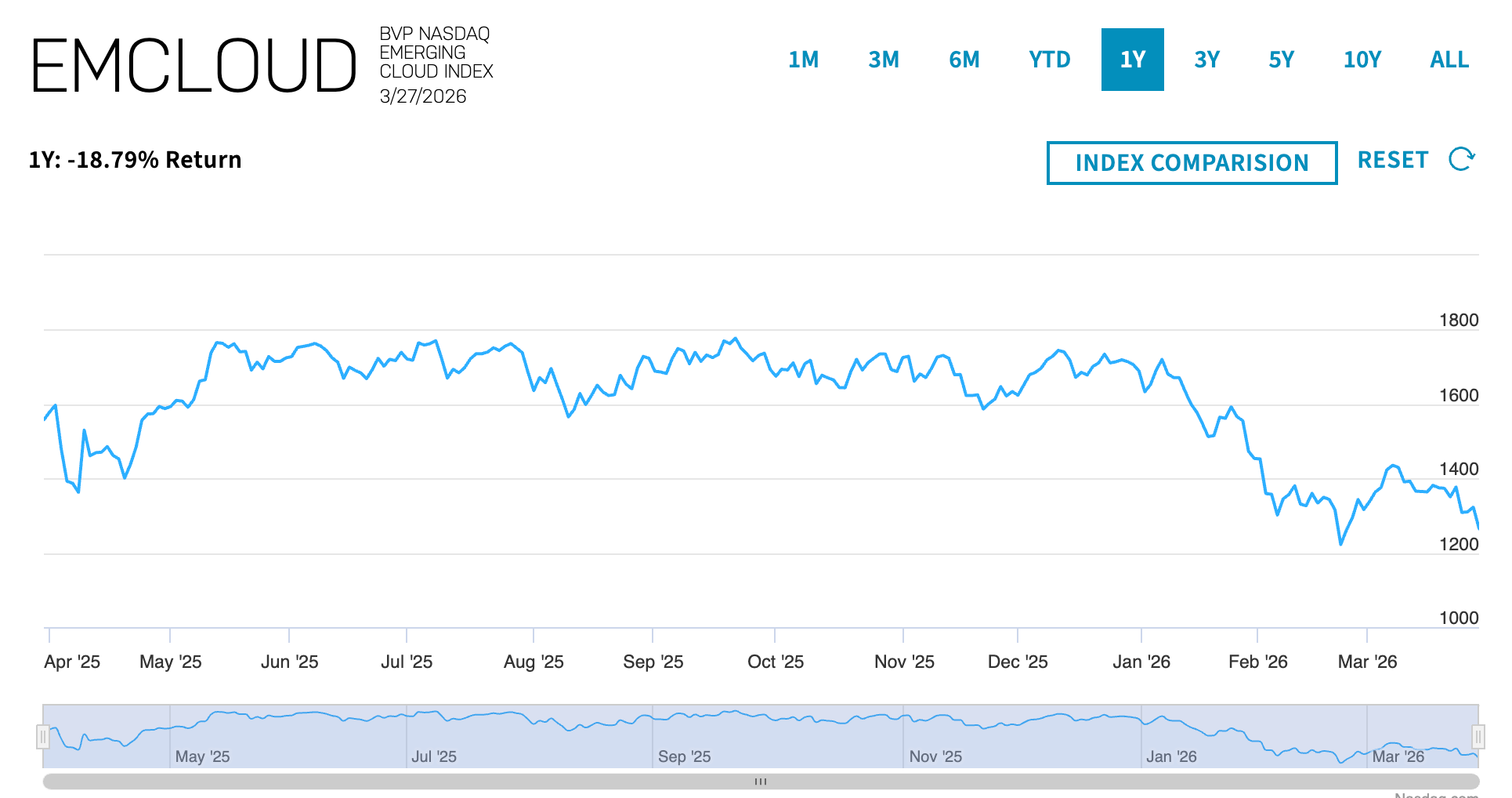
The Emerging Cloud Index shows public software companies down 6.3% YTD.
Pavillon conducted a survey back in May of 2025 showing that the new CAC Ratio for new customers continues to rise, 14% higher than in 2024. Check it out HERE.
And many CMOs we talk to still don't have enough pipeline coverage.
Meanwhile, every channel is dead or dying (according to {insert name} thought leader).
The reality is that it's much more complex than asking "what's the best channel or tactic?"
Your product, positioning, brand, pricing, and sales motion all impact CAC.
You can have the BEST marketing in the world with the best content, but if your product isn't solving a big problem at an affordable cost, then it doesn't matter how many ads you run.
There are, however, ALWAYS things in your control as a marketer that can help improve efficiency, and those are the variables you need to focus on.
So, in this newsletter, we'll break down a few things we see that help brands improve efficiency and reduce CAC.
- Focus on high-intent vs. low-intent keywords
- Be specific vs. broad and vague
- Target those most likely to trigger opp creation
- Build mental availability with out-of-market buyers
Alright, let's get into it. 👇
1.) Focus on high-intent vs. low-intent keywords
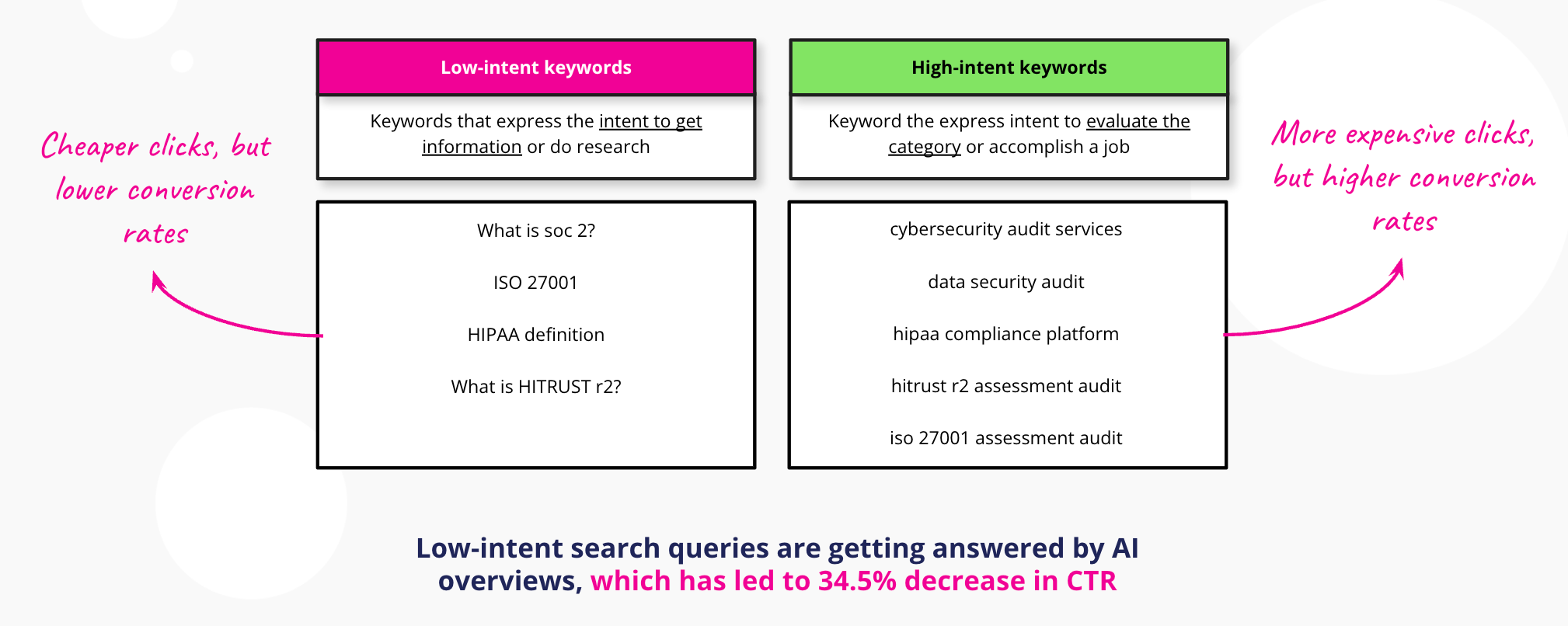
If you are running paid search, you probably know the difference between a low-intent keyword and a high-intent keyword.
A low-intent keyword expresses intent to gather information or conduct research. Think "why should I get SOC 2 compliant?"
A high-intent keyword conveys intent to evaluate a category or accomplish a task. Think of keywords that leverage platform, app, software, automate, etc.
They don't have to include these modifiers, so consider how you would search for your product if you didn't know a brand for that category.
How does this impact CAC?
If you are spending a significant portion of your budget on informational keywords, whether intentionally or not, it means you are spending dollars on people who aren't interested in talking to sales.
The more money you spend without increasing pipeline and closed-won revenue, the higher your CAC.
Google and Bing are "intent-based" channels.
You should be bidding on "intent", not on generic search terms that may drive traffic, but ultimately don't lead to business outcomes your CEO cares about.
2.) Be specific vs. broad and vague
There is a pandemic of ads that over-index on outcomes or on broad, platform-based messaging that ultimately lead people to scroll past, with no clue what you do.
How many ads have you seen that mention that the XYZ brand will increase your revenue?
Your product may help increase revenue, but without context, you become noise among all the other brands saying the same thing.
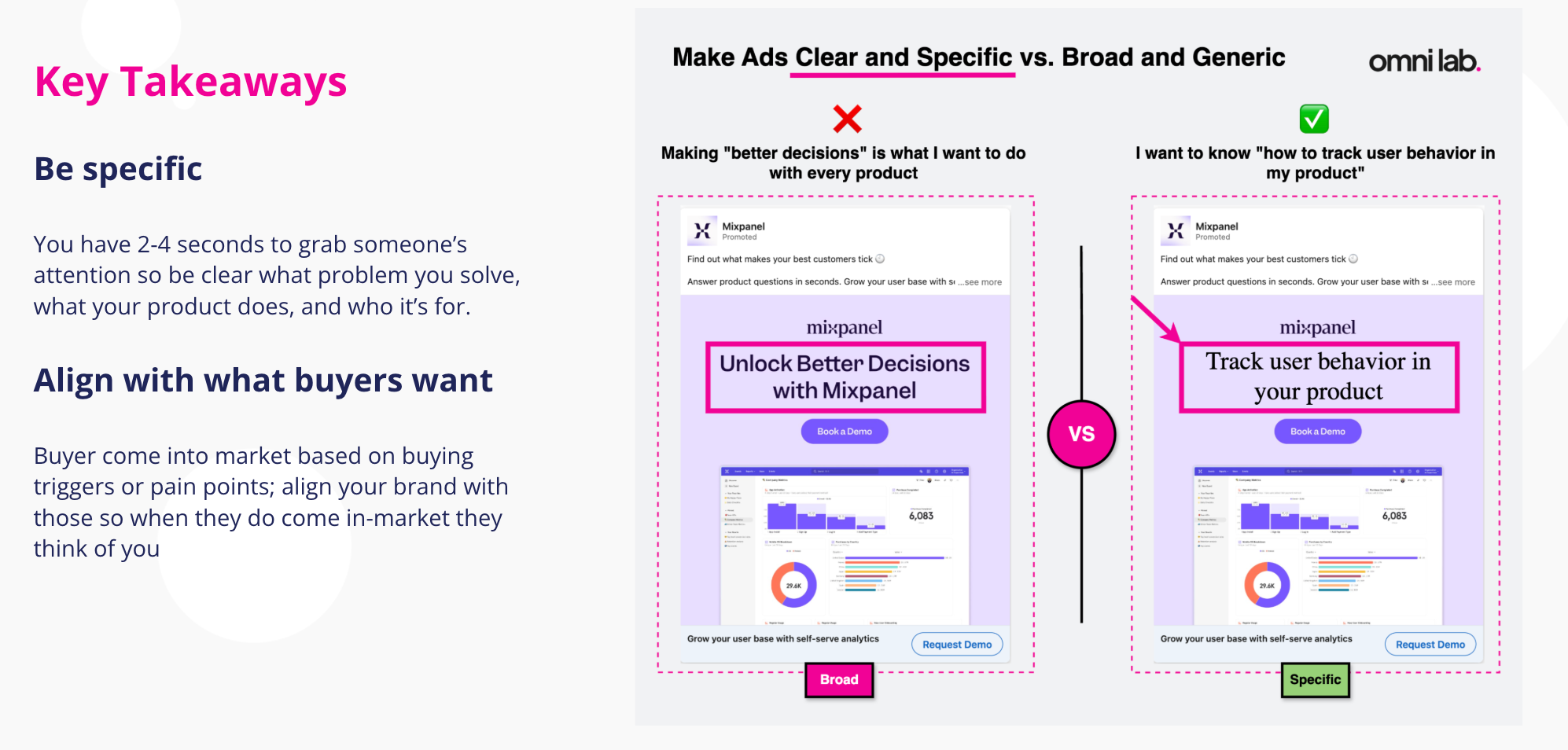
Take the example below from MixPanel.
- Ad #1 - "Unlock better decisions with MixPanel"
What decisions? And what does MixPanel even do? Remember, people first look at the image, then move down to your in-channel headline, and then maybe up to your introductory text.
What if you were more explicit about the job your product can solve?
- Ad #2 - "Track user behavior in your product."
This is something I might say to my team, which helps align immediately with what I "want".
MixPanel, of course, does many other things than "track user behavior," and that's great.
However, they only need to focus on 1-3 of the top triggers that buyers think about, so when they are in-market, they feel about you for those 1-3 things.
Or take this example from Clari.
"Get real about revenue."
Get real, how? What do you mean? How can Clari actually help me increase revenue?
Even the introductory text doesn't really help me understand what they do.
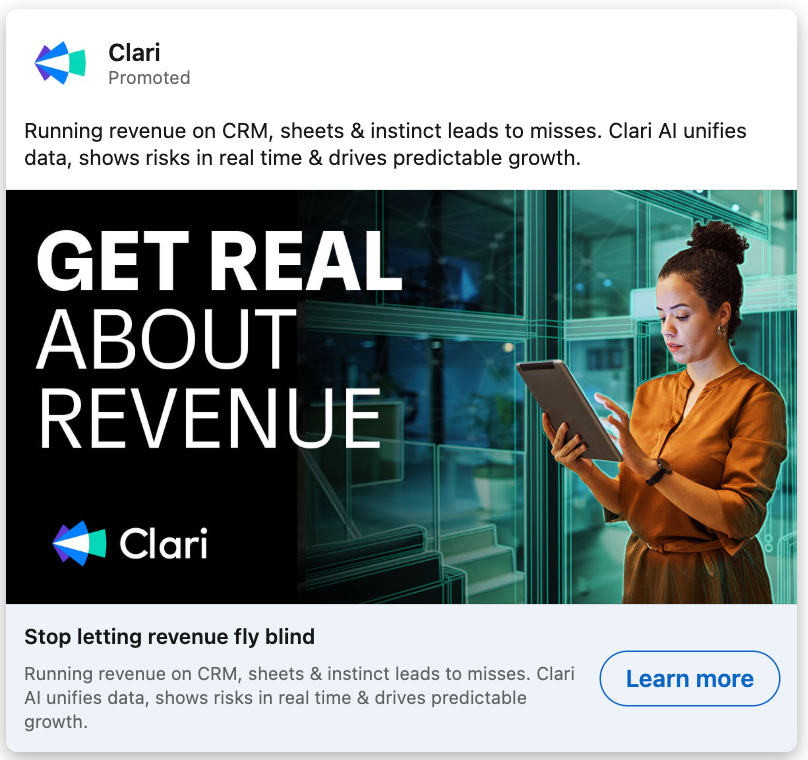
"Running revenue on CRM, sheets & instinct leads to misses. Clari AI unifies data, shows risks in real-time & drives predictable growth."
If you don't get specific, you become noise, and you are easily forgotten.
If you are noisy and easily forgotten, it means buyers don't remember you when they do come in-market.
Could you be specific and speak the customer's language?
3.) Target those most likely to trigger opp creation
Every channel has pros and cons when it comes to targeting, but channels like LinkedIn Ads provide immense granularity on who your message is reaching.
However, what often happens is that teams over-index on decision-makers, thinking it's better to have people who will sign the deal rather than those with no authority. And it's not that decision-makers aren't important; however, they often don't feel the problem and have delegated it to their team for evaluation.
Take the example below from a Series B B2B SaaS brand we are working with.
We pulled the last 12 months of historical data to better understand which titles were triggering opportunity creation and found that almost zero were decision-makers VP+ and above.
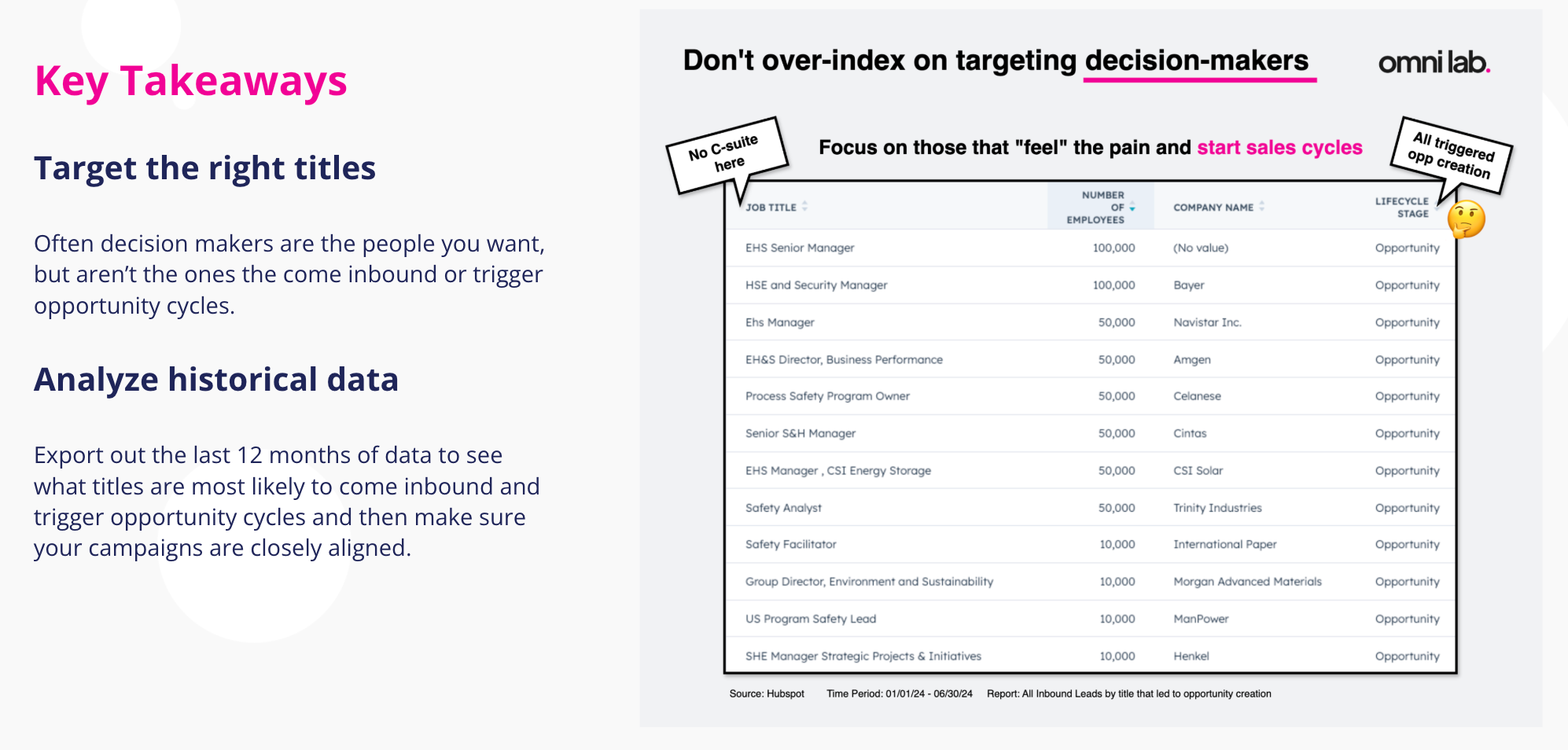
With this insight, shouldn't you be focusing most of your budget on the titles and personas most likely to come in inbound?
We certainly think so.
The more people you can bring in that trigger opps, the more customers you can close, and the lower your CAC will be.
4.) Build mental availability with out-of-market buyers
Everyone knows not all buyers are in-market. The issue is that we all tend to over-index on channels and audiences that are already showing interest and intent in those channels.
If everyone in the product category is going after the same 5% of people who are in-market, those audiences become incredibly expensive.
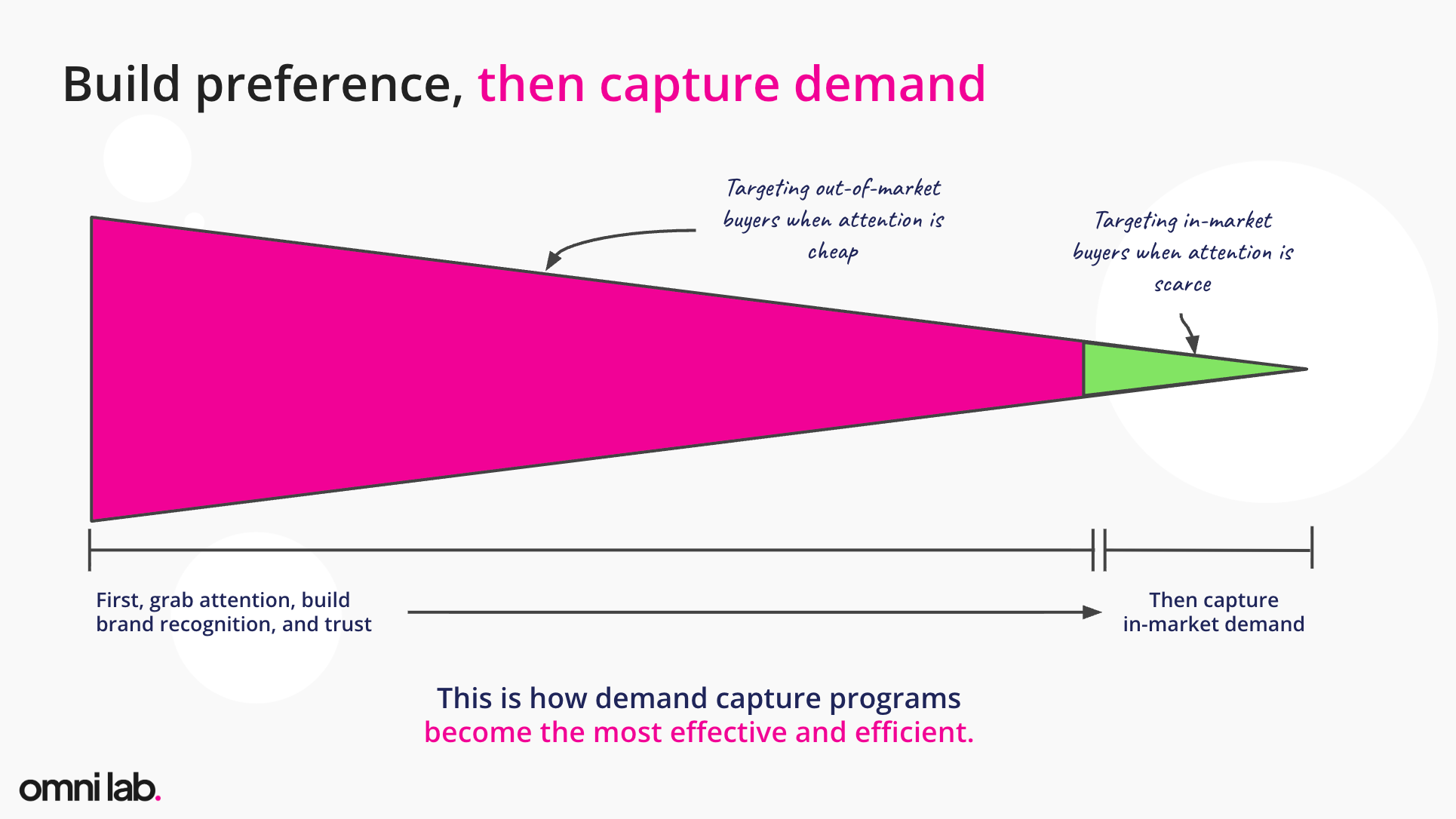
Small audiences, more competition, higher CPMs/CPCs = Increased CAC
What makes marketing more efficient is strong brand awareness and mental availability.
Think about the psychological bias called the mere-exposure effect.
It's the psychological phenomenon in which people come to prefer things simply because they have been repeatedly exposed to them.
You want to be a known brand, so that by the time they search on Google for your category or brand term, they are more likely to reach out to you because you are well-known.
Just because your CRM said Google was the last touch before the conversion doesn't mean it was the only touch.
Often, it was just the last place the buyer went after being exposed to your brand via events, LI organic content, webinars, friends, social ads, or other sources.
You need brand and demand to work together.
Brand make demand more efficient.