People do not move linearly through your perfectly mapped funnel.
Quick story…
A few months ago, another vendor mentioned a tool that de-anonymizes website traffic at the account level. Around the same time, I started seeing posts from their Director of Demand Gen on LinkedIn. I brought it up with my co-founder, Jason, and we agreed it would be a great fit to integrate into our product.
Then we got busy, and I forgot the company existed.
Months later, someone mentioned them in a community I'm part of. That reminded me, and this time I reached out and booked a meeting. We went all the way to contract before deciding not to buy, so we could stay focused on a few higher priorities.
In their CRM, that's one opportunity, probably sourced to the community or marked inbound, now closed-lost. It doesn't show the vendor mention, the LinkedIn posts, the months I went dark, or that the deal could come back when our priorities change.
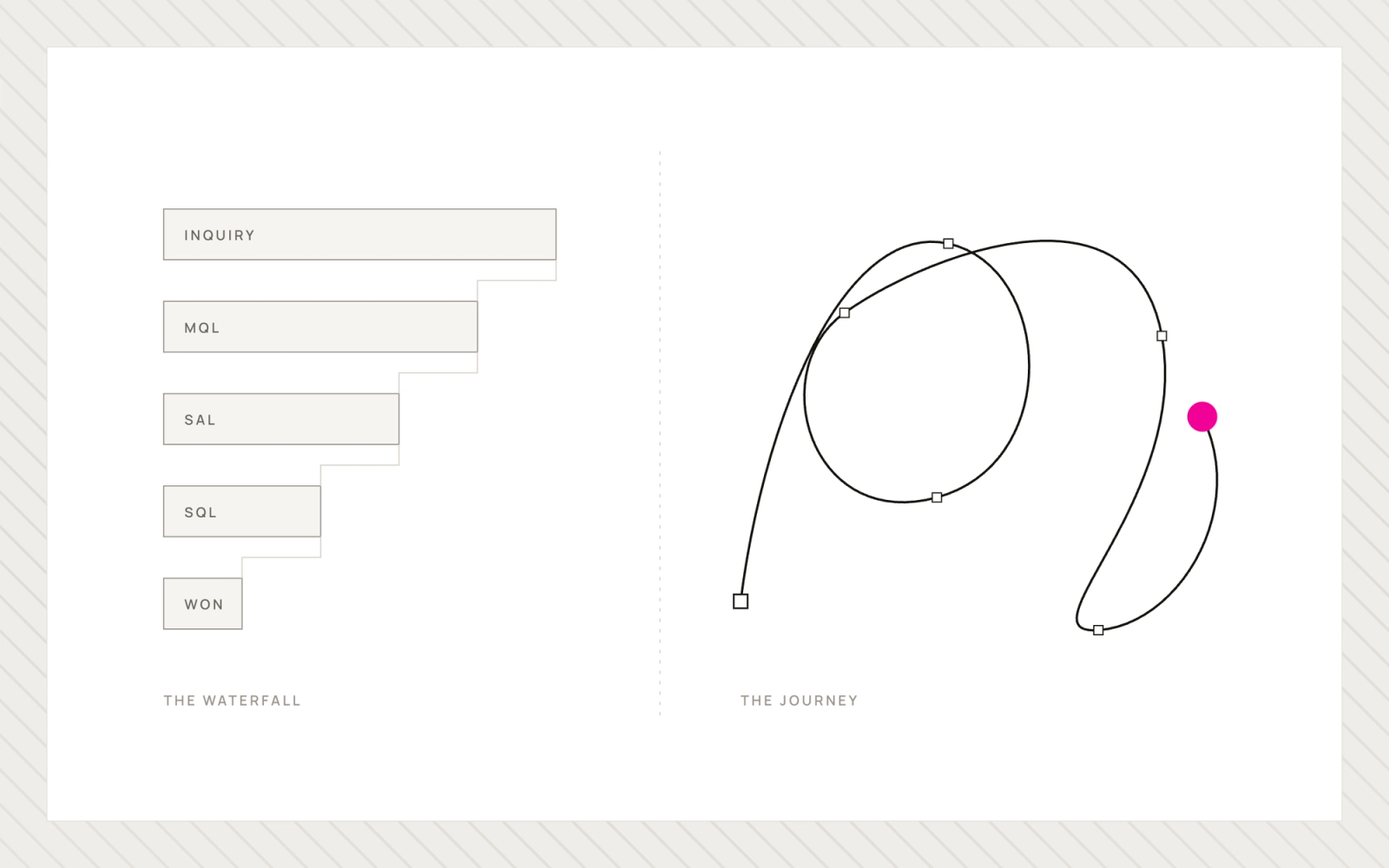
A waterfall report reads that as one lost deal. It assumes the B2B buyer journey runs in a straight line: awareness, interest, MQL, SQL, opportunity, closed-won. The stages are real. The straight line isn't; I went in and out of awareness.
Many paid programs underdeliver because they run overly complicated stage-by-stage triggers, built for a world buyers don't follow.
With that said, I want to break down:
- Where that model came from
- What the research says about how buyers actually move
- And how we build paid programs around the journey that exists
Where the funnel came from
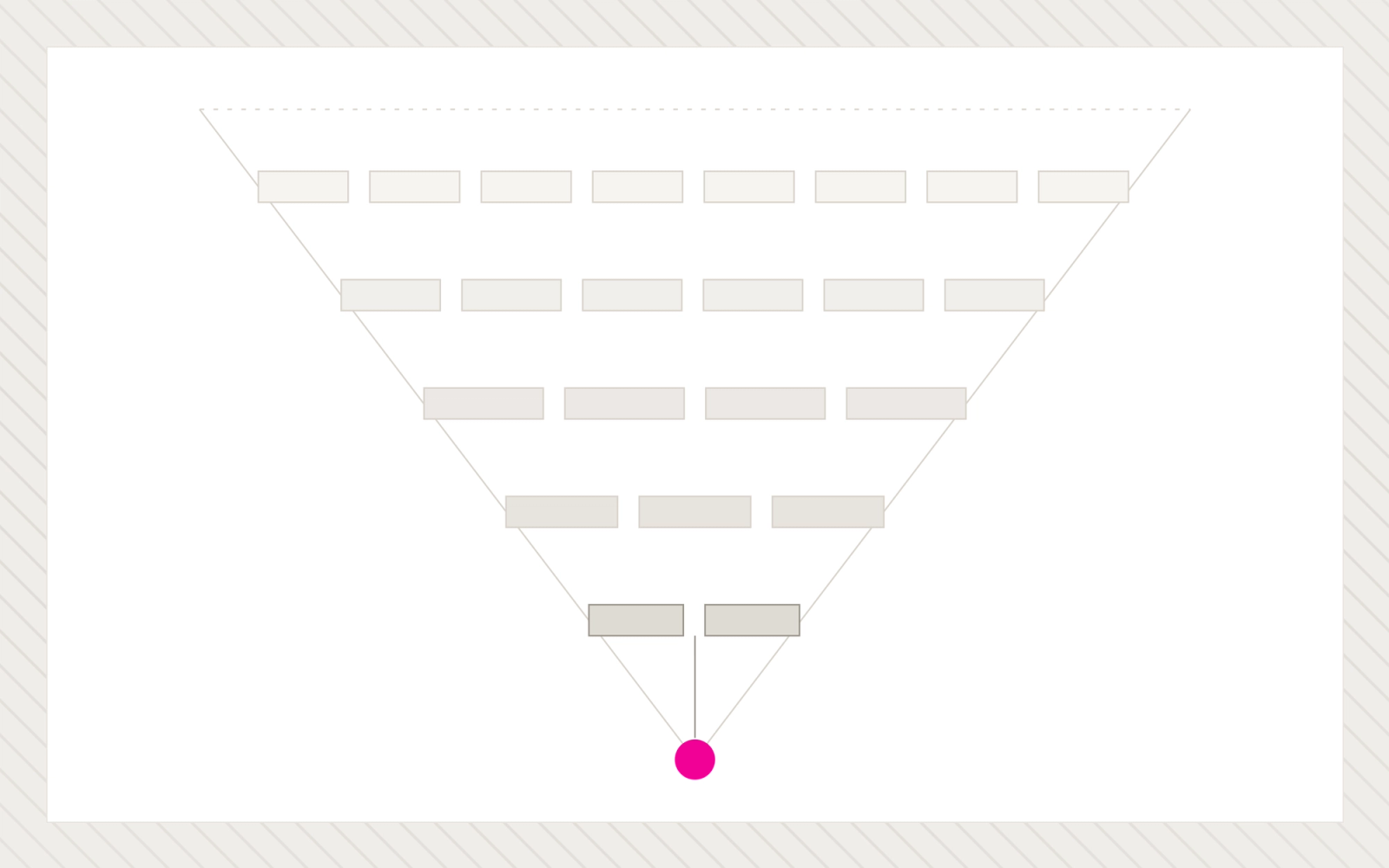
In 1898, E. St. Elmo Lewis described how a salesperson moves a prospect from attention to action. By 1924, the idea had a shape: a funnel, wide at the top, narrow at the bottom.
In 1966, Eugene Schwartz added the piece most B2B programs still ignore. In Breakthrough Advertising, he argued that buyers sit at five levels of awareness, and that your message only works if it meets them where they are. MQL models like the SiriusDecisions Waterfall from the early 2000s traces back to Eugene Schwartz's stages of awareness.
 The five levels of awareness
Where the funnel went wrong
Schwartz was describing where buyers are, not a path they follow, but B2B marketers read it as a path anyway.
To its credit, the demand waterfall did give marketing and sales shared stages and a shared definition of a qualified lead, which beat arguing about lead quality. It also turned the MQL into a trigger. A buyer downloads a guide, crosses a score threshold, and gets pushed to the next stage.
But both the funnel and the waterfall models assume buyers move forward programmatically, one trigger at a time.
Most paid programs still get built and reported this way. Campaigns map to stages, success is measured in stage conversion, and a stalled account reads as a failure of whatever campaign touched it last.
Unfortunately for B2B marketers, that’s not how buyers actually behave.
What the research says about how buyers move
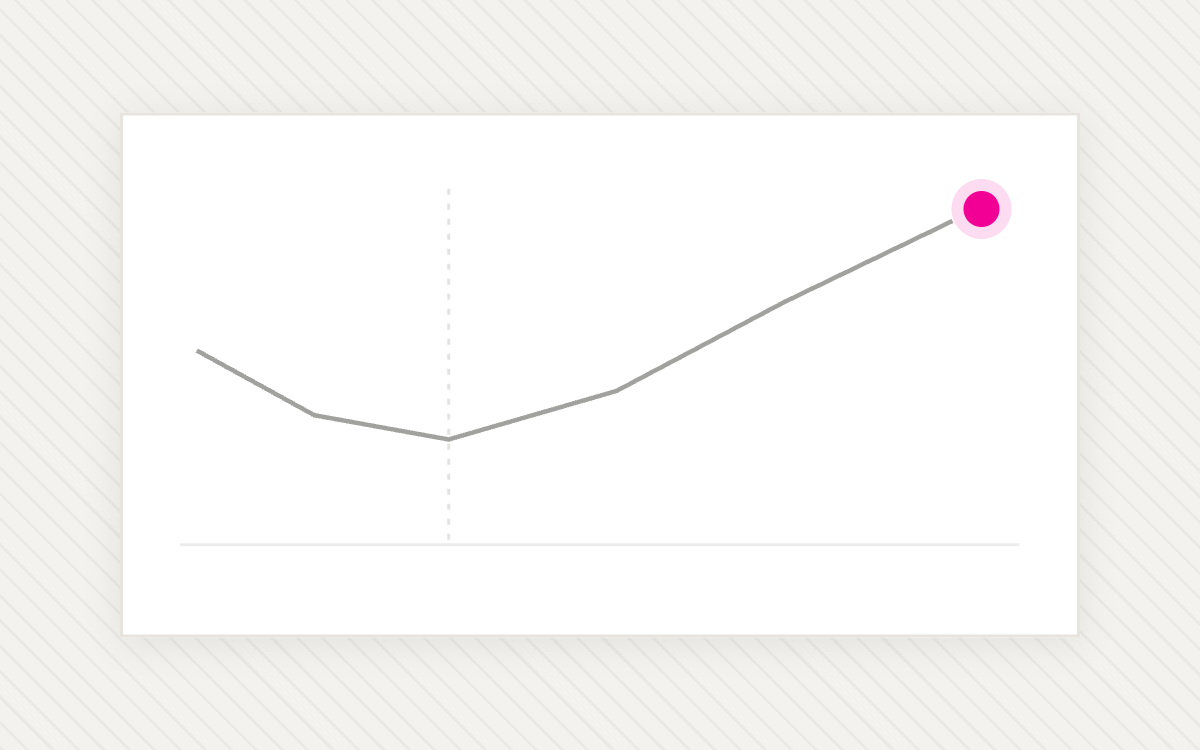
The data on B2B buying doesn't describe a funnel or a waterfall. It describes a loop.
- Gartner finds buyers loop back through every buying job at least once.
- HockeyStack counts about 81 touch points before a deal closes.
- Dreamdata puts first touch to revenue at roughly 272 days.
- Forrester found nearly 90% of buyers had a purchase stall in 2023.
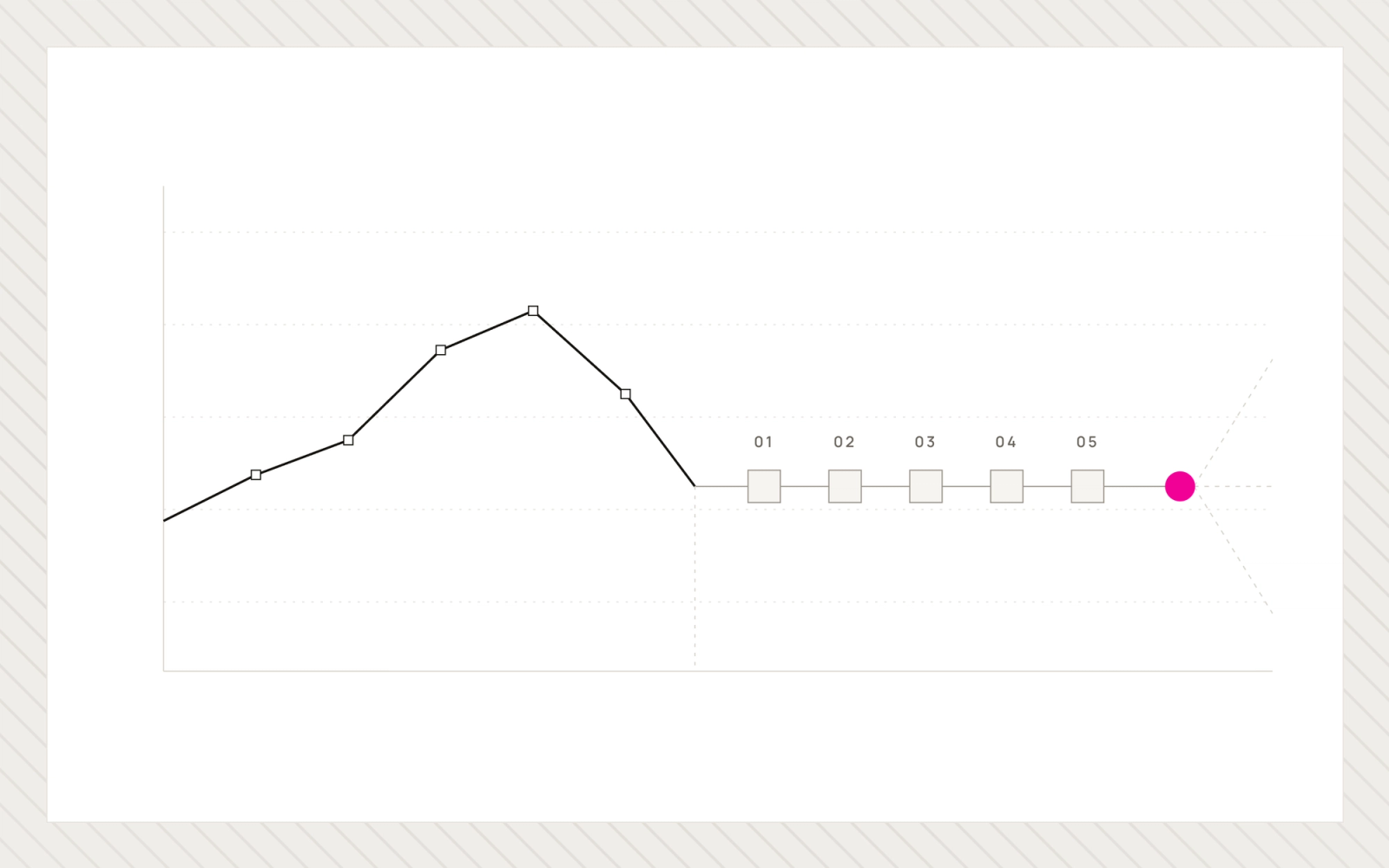
I read those numbers as a measurement problem before a strategy problem. A 272-day journey with 81 touch points won't fit inside a 30-day attribution window or a stage report built on last touch.
When the report can't see the loop, the team treats the loop as leakage and goes looking for more leads.
How to build a paid social strategy for a buyer journey that loops
If buyers can be at any stage at any time, your paid social program needs to be present at every stage, all at once. While about 5% of your audience is in-market for a solution, roughly 95% of your market is not. That means two jobs running side by side:
- Build preference with the 95% who are out-of-market.
- Convert the 5% who are in-market and showing intent.
Here’s how to do it.
Start with who you're talking to and what they care about
Define the ICP. We document job titles, company size, industry, use case, geography, and buying committee size before building a single audience. Across 200+ B2B brands, target account lists have beaten every other targeting approach on CTR, engagement rate, and conversion rate. So the target account list (TAL) is usually the foundation, with title, company size, industry, and intent data layered on top.
Find the segments that actually convert. Not every slice of the ICP deserves equal budget. We work with each brand to pull and analyze CRM data to see which segments turn into pipeline, not just leads, and weight spend toward them (this derisks the program)
Rank pain points by segment. A CFO and a demand gen manager at the same account care about different problems. We organize pain points by segment and prioritize them, so every ad starts with a problem the reader already recognizes.
1. Build ads around those pain points
Each priority pain point gets ads across four content types:
- Thought leadership
- Top-of-funnel
- Product marketing
- Social proof
They do different jobs, so we don't judge them on the same metric.
 Four types of content for B2B paid media
2. Launch to the out-of-market audience, then test
We launch prospecting campaigns to the out-of-market audience, organized by segment and content type, keeping the number of segmented campaigns low. The general target is 30-40% of the ICP reached at 3-5x frequency. Why? That’s often the max number of people that are active in a given period (meant to be directional, then a pass-or-fail metric).
Inside that structure, we run 1-3 impact tests per channel per month across three variables: creative, audience, and pain point. Each test gets a hypothesis, client approval, and 30-45 days without strategic changes so the result means something.
Then we act on what we learn. Creative that's earning attention gets more budget and new variations on the same message, while losers get paused. I'd rather find three messages that work and say them ten different ways than keep hunting for one perfect ad.
3. Let engagement decide where an account goes next
The out-of-market layer does more than build preference. Every ad engagement and website visit becomes a first-party audience we can use later with retargeting.
We build those audiences on 30, 90, and 180-day windows, and the creative shifts toward product marketing, social proof, and direct offers aimed at conversion.
If they convert, we consider adding the account to a deal acceleration campaign. This campaign targets open opportunities synced from the CRM and keeps the whole buying committee seeing proof while sales works the deal.
If they don't convert within 30 days, they go back to the out-of-market layer. They keep seeing thought leadership until they show intent again, which is how a vendor stays in front of someone like me during the months I went dark.
 Engaging the out-of-market audience
If there is engagement, then they’ll move into the retargeting layer. If they don’t convert in the retargeting window, they simply go right back to out-of-market. Again, we aren’t trying to “move” someone from one step to the other we are simply building brand preference.
4. Measure account progression, not stage handoffs
We connect paid media to the CRM and track whether accounts exposed to brand campaigns move through the pipeline faster than accounts that weren't. That question still holds up when buyers loop. Stage conversion rate doesn't.
This is especially important for longer sales cycles and higher-ACV brands that can’t rely on a stream of direct-response conversion in a short timeline. Account progression helps justify marketing spend, while the company works to warm-up and navigate a complex deal.
Final thoughts
I don't think the funnel is wrong. The stages Schwartz described in 1966 still exist, and every buyer passes through them. What breaks is the assumption that they pass through once, in order, on your timeline.
Schwartz had it right: meet buyers where they are. The funnel tells you where they could be. It doesn't tell you what order they'll get there in.
If your waterfall shows leakage between MQL and SQL, check whether those accounts actually left or just went quiet. The program that's still in front of them when they come back is the one that makes the shortlist.