From what I see many marketing teams treat ad creative like a lottery ticket. Brief five concepts, launch them, wait for one to win, then pour budget into that single ad until it fatigues. When it does, the search for the next winner starts over.
However, this approach optimizes for the wrong thing. It treats each ad as a standalone bet instead of one instance of a message the buyer needs to see repeatedly before it registers. A single ad, no matter how clever, does not build memory. Repetition does.
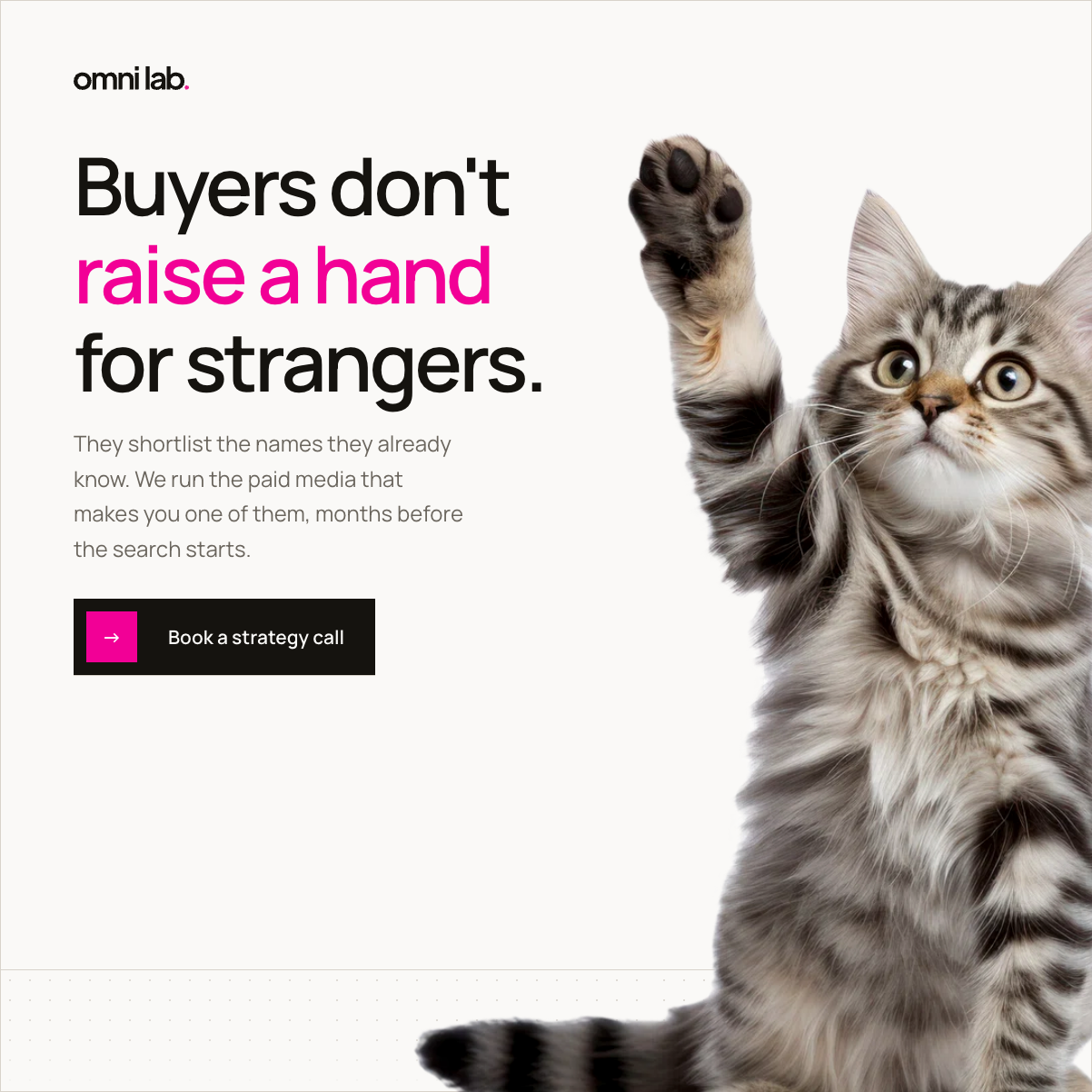
It would be like me saying that this ad below with a cat had the best CTR, and therefore I should push all my budget to it and pause the other ad creatives. Or that maybe this cat ad had the best conversion rate and therefore I should do the same thing.
You wouldn't do that.
Because you know that a single buyer was likely exposed to many different ads from your company and it was more the combination of understanding what you did, how you did it, and who you did it for that really ended up leading to the conversion.
The one-winning-ad trap
Chasing a single winning ad feels rigorous. It looks like testing. But in practice, it narrows the account to whatever performed best in a short window, then treats everything else as a failure to eliminate.
I would not recommend pausing every underperforming ad the moment one pulls ahead on CTR or engagement.
A higher-performing ad deserves more budget. That is a reasonable, data-backed decision. What is not reasonable is concluding that one ad is "the message" and every other creative angle was wasted effort.
The mistake is treating ad performance as a verdict on the message instead of a verdict on the execution. A pillar can be right and still need five different visual treatments before it lands with a given audience segment.
The bottom line: A winning ad tells you which execution worked this week. It does not tell you the message is finished.
Messaging pillars come first, concepts come second
Before any concept gets briefed, the pillar needs to exist. A messaging pillar is the core idea you want a buyer to associate with your brand, stated plainly enough that ten different creative treatments could all express it without diluting it.
At Omni Lab, our own content operates around a few CEPs and messaging pillars. Quite a bit of our content links back to these. For example, here are some of ours:
CEPs
- We need more qualified pipeline from paid.
- We’re too dependent on capturing existing demand.
- Our buyers don’t know us before they enter the market.
- Our agency is too reactive and slow.
Which, then connect to messaging pillars:
Messaging pillars
- Optimize for business outcomes, not platform metrics.
- Balance brand development with demand capture.
- Get on the shortlist before the buying process starts.
- Paid media requires continuous learning and proactive optimization.
Sometimes I see this get flipped around.
They start with a swipe file of ad concepts (visual metaphor, before-and-after, split screen) and pick whichever looks most novel, then figure out what to say inside it. That produces a feed full of interesting-looking ads with no consistent thread between them.
A buyer who sees three of your ads in a month should be able to sense they came from the same brand making the same case, even if the visual treatment is completely different each time.
Note: This is different from brand guidelines. Guidelines govern color, type, and logo use. A messaging pillar governs the idea. You can be visually consistent and still say something different every time, which is the actual failure mode here.
Why repetition beats novelty (and why it doesn't get boring)
The instinct to avoid repeating a message comes from the internal team's fatigue with it, not the buyer's. Your marketing team sees every ad in the account daily. Your buyer sees it once, maybe twice, in a feed full of other things competing for a few seconds of attention.
This is where reach and frequency matter more than most B2B teams give them credit for. In our operating model, we target 30 to 40 percent reach across a client's ICP with 3 to 5x frequency for prospecting campaigns, and 7 to 9x frequency for retargeting. That frequency target exists because a buyer needs multiple exposures to a message before it moves from noticed to remembered, and remembered is the whole point of brand-building spend.
Repetition of the message is not the same as repetition of the ad. You can hit that frequency target while showing the buyer five different executions of the same pillar. In fact, varying the execution while holding the message constant is what keeps the frequency from feeling stale. The buyer registers the idea, not the specific asset.
The bottom line: the goal of B2B ad creative strategy is not one perfect ad. It is enough exposure to one consistent idea, delivered through enough different executions that the buyer never feels like they are seeing the same ad twice.
Turning one pillar into three ad concepts
Here is what that looks like in practice. A recent set of concepts we built for ShareGate, a Microsoft 365 and SharePoint migration tool, all carry the same pillar: migrations go wrong when you can't see what's coming, and ShareGate's job is to make that visibility available before the surprises hit. Three completely different executions, one consistent idea.
Visual metaphor. A moody, high-contrast image of two blurred figures walking past each other, paired with a callout flagging "2 duplicate matches" and the headline "Get clear conflict visibility before you start your M365 migration." The mood does the emotional work; the callout makes the abstract threat concrete.

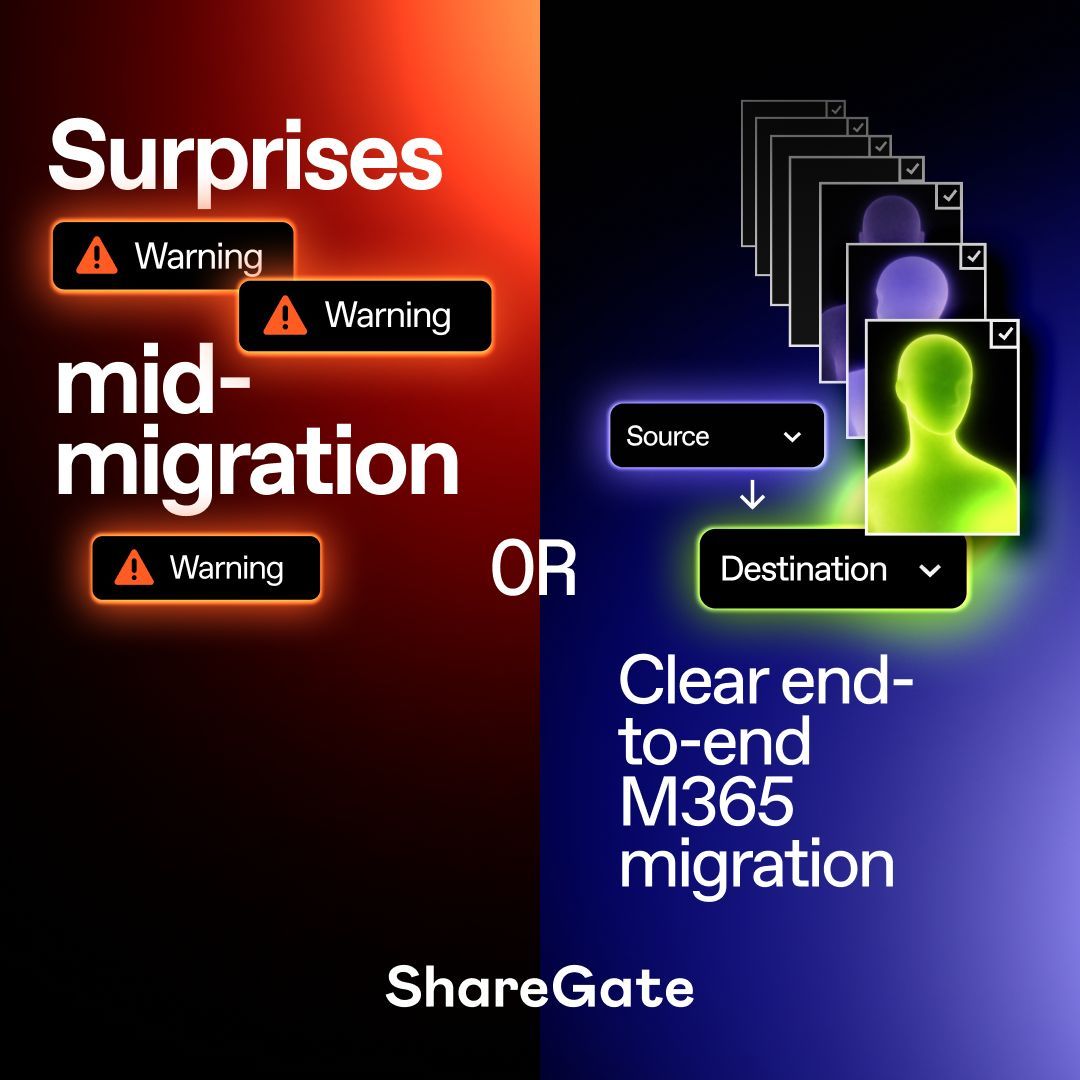
Before and after / split screen. Left side, a wall of red warning states stacked under "Surprises mid-migration." Right side, a clean source-to-destination mapping under "Clear end-to-end M365 migration." Same pillar, zero metaphor, just a direct contrast between chaos and control.
Meme / cultural reference format. A well-known internet meme format repurposed to make the point with humor: one side labeled "IT Pro" struggling to patch a leak, the other labeled "ShareGate Migrate" fixing it cleanly. It carries the exact same underlying claim as the first two, just through a completely different emotional register.

Three different concepts. Three different tones, from cinematic dread to clean data visualization to internet humor. Someone could see all three in the same month and never consciously connect them as "the same ad," but the underlying claim, that ShareGate gives you visibility before the migration goes sideways, lands every time.
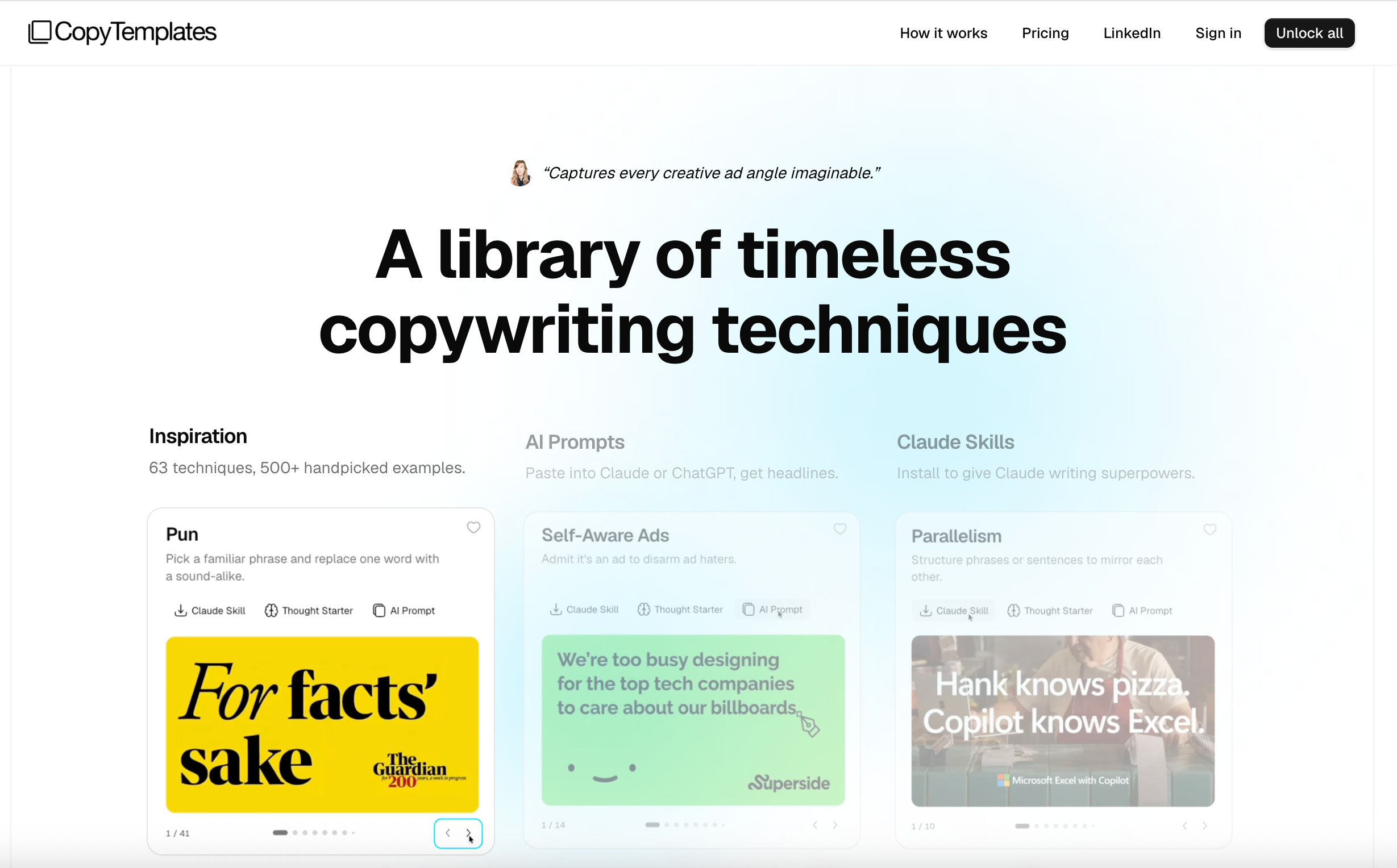
If you're looking for more headline concept types to draw from, a partner of mine , Shlomo Genchin, has built a library of headline frameworks with corresponding Claude skills to generate them at scale. It's goooold. :)
Check it out HERE.
Final thoughts
The question to ask before briefing new creative is not "what's our next ad idea." It's "which pillar is this concept in service of, and have we said it enough different ways yet."
A winning ad is a useful signal. It tells you an execution resonated and deserves more budget behind it. It is not a finish line, and it is not proof the message has landed with your full audience. The finish line, if there is one, is a buyer who can describe your positioning back to you without having seen a single specific ad, because they've absorbed the idea across a dozen different ones.
Start with the pillar. Rotate the concept. Let the message repeat itself in new clothes as often as it needs to.